


淘宝商品评论接口技术实现:从评论获取到情感分析全流程方案
电子说
描述
商品评论接口是电商数据分析的重要入口,通过评论数据可以挖掘用户需求、分析产品优缺点、监控舆情走向。本文将详细讲解淘宝商品评论接口的技术实现,重点解决评论分页机制、反爬策略应对、数据解析与情感分析等核心问题,提供一套合规、高效的技术方案,同时严格遵守平台规则与数据采集规范。
一、评论接口基础原理与合规要点
淘宝商品评论数据存储在商品详情页的评论模块,通过动态加载方式呈现。实现评论接口需理解其基本原理并遵守以下合规要点:
数据范围:仅采集商品公开评论(不包含追评、问答等非评论内容)
请求频率:单商品评论请求间隔不低于 10 秒,单 IP 日请求不超过 1000 次
使用规范:数据仅用于个人学习、市场调研,不得用于商业竞争或恶意分析
反爬尊重:不使用破解、绕过等方式获取数据,模拟正常用户浏览行为
评论接口的核心技术流程如下:
plaintext
商品ID解析 → 评论参数构造 → 分页请求发送 → 评论数据提取 → 数据清洗与分析
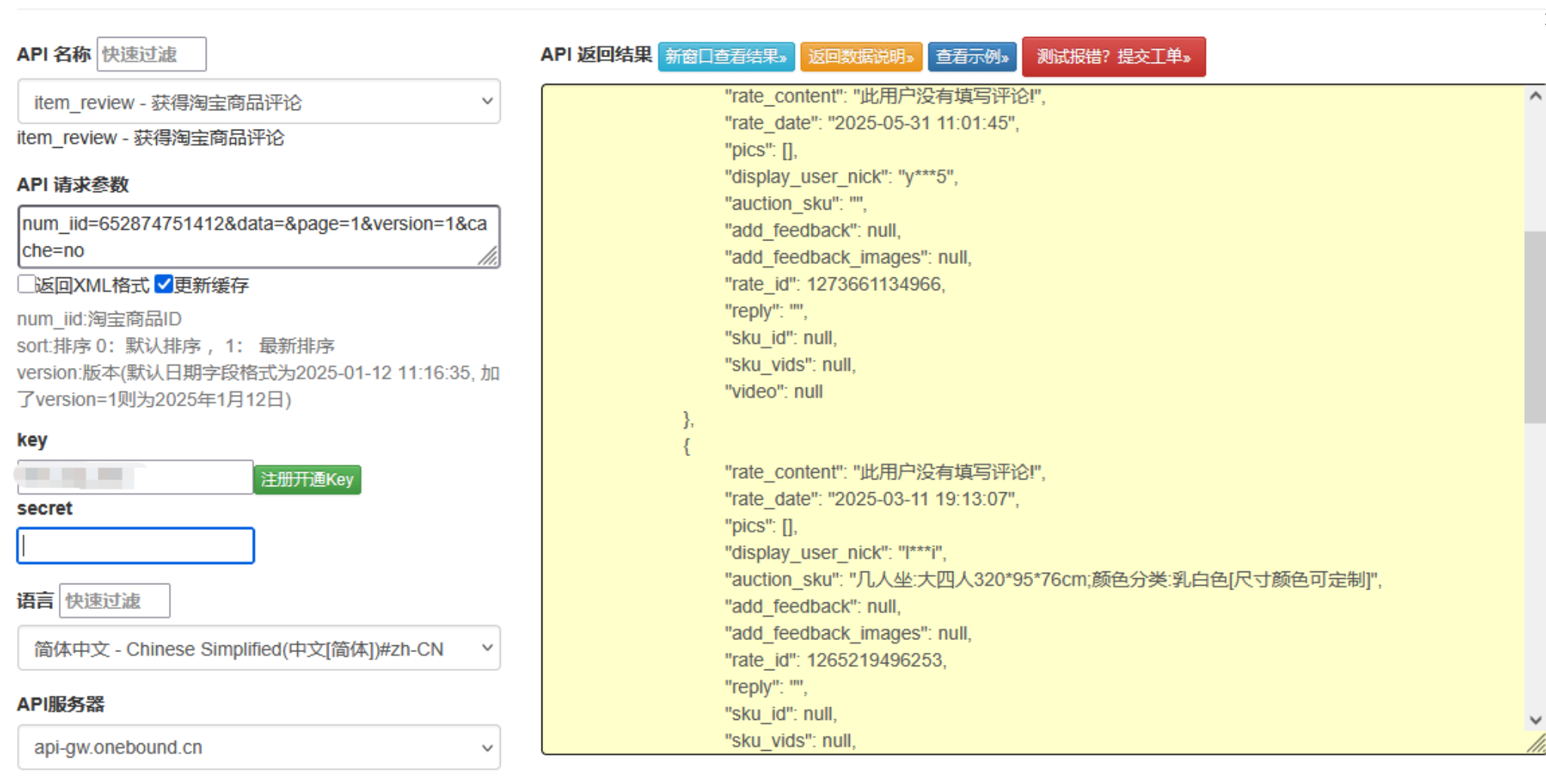
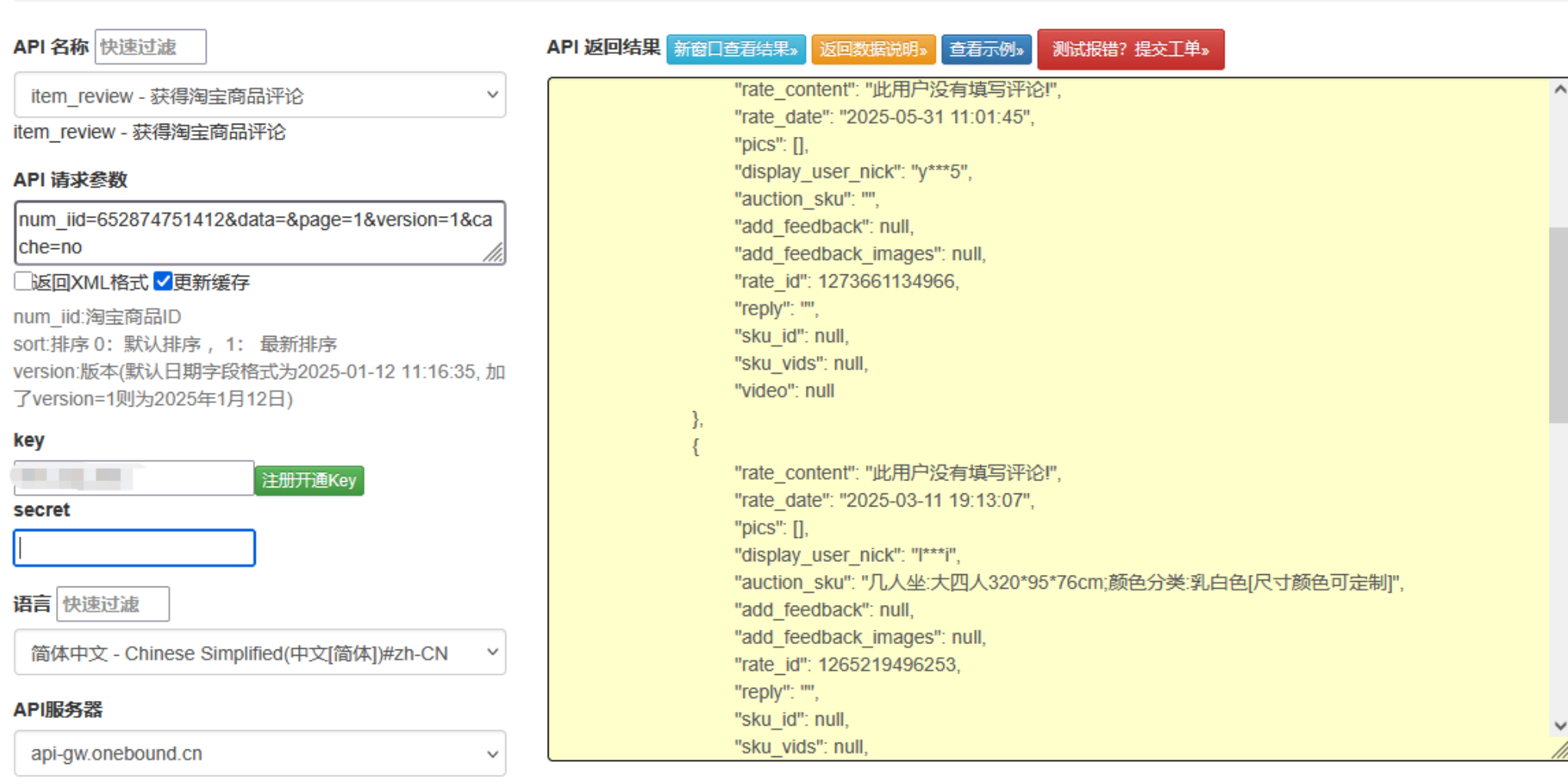
点击获取key和secret
二、核心技术实现:从评论获取到数据解析
1. 商品 ID 解析工具
获取商品评论的前提是解析出正确的商品 ID(item_id),可从商品详情页 URL 或页面内容中提取:
python
运行
import re
import requests
from lxml import etree
class ProductIdParser:
"""商品ID解析器,从URL或页面中提取item_id"""
def __init__(self):
self.headers = {
"User-Agent": "Mozilla/5.0 (Windows NT 10.0; Win64; x64) AppleWebKit/537.36 (KHTML, like Gecko) Chrome/98.0.4758.102 Safari/537.36",
"Accept": "text/html,application/xhtml+xml,application/xml;q=0.9,*/*;q=0.8",
"Referer": "https://www.taobao.com/"
}
def parse_from_url(self, product_url):
"""从商品URL中提取item_id"""
# 匹配常见的商品URL格式
patterns = [
r"item.taobao.com/item.htm?.*id=(d+)",
r"detail.tmall.com/item.htm?.*id=(d+)",
r"id=(d+)" # 通用匹配
]
for pattern in patterns:
match = re.search(pattern, product_url)
if match:
return match.group(1)
return None
def parse_from_page(self, product_url):
"""从商品页面内容中提取item_id(URL解析失败时使用)"""
try:
response = requests.get(
product_url,
headers=self.headers,
timeout=10,
allow_redirects=True
)
response.encoding = "utf-8"
# 从页面HTML中提取item_id
tree = etree.HTML(response.text)
# 尝试从meta标签提取
meta_content = tree.xpath('//meta[@name="mobile-agent"]/@content')
if meta_content:
match = re.search(r"item_id=(d+)", meta_content[0])
if match:
return match.group(1)
# 尝试从脚本标签提取
script_content = tree.xpath('//script[contains(text(), "itemId")]/text()')
for script in script_content:
match = re.search(r"itemIds*=s*'?(d+)'?", script)
if match:
return match.group(1)
return None
except Exception as e:
print(f"从页面提取item_id失败: {str(e)}")
return None
def get_product_id(self, product_url):
"""获取商品ID,先尝试从URL提取,失败则从页面提取"""
product_id = self.parse_from_url(product_url)
if product_id:
return product_id
return self.parse_from_page(product_url)
2. 评论参数构造器
淘宝评论请求需要特定的参数组合,包括商品 ID、页码、排序方式等,其中部分参数需要动态生成:
python
运行
import time
import hashlib
import random
class CommentParamsGenerator:
"""评论请求参数生成器"""
def __init__(self):
self.app_key = "12574478" # 模拟应用标识
self.sort_types = {
"default": 0, # 默认排序
"latest": 1, # 最新评论
"good": 2, # 好评
"poor": 3 # 差评
}
def generate_params(self, item_id, page=1, sort="default", page_size=20):
"""
生成评论请求参数
:param item_id: 商品ID
:param page: 页码
:param sort: 排序方式
:param page_size: 每页评论数
:return: 评论请求参数字典
"""
# 基础参数
params = {
"itemId": item_id,
"pageNum": page,
"pageSize": page_size,
"sortType": self.sort_types.get(sort, 0),
"auctionNumId": item_id,
"userType": 0,
"platform": "h5",
"needFold": 0,
"callback": f"jsonp_{int(time.time() * 1000)}_{random.randint(1000, 9999)}"
}
# 生成时间戳和签名
t = str(int(time.time() * 1000))
params["t"] = t
params["sign"] = self._generate_sign(params)
return params
def _generate_sign(self, params):
"""生成签名,模拟平台参数验证机制"""
# 按参数名排序并拼接
sorted_params = sorted(params.items(), key=lambda x: x[0])
sign_str = "&".join([f"{k}={v}" for k, v in sorted_params if k != "sign"])
# 加入固定密钥(仅作示例)
sign_str += "&secret=taobao_comment_demo_key"
# 计算MD5签名
return hashlib.md5(sign_str.encode()).hexdigest().upper()
3. 评论请求发送器
处理评论分页请求,包含反爬机制应对策略:
python
运行
import time
import random
import requests
from fake_useragent import UserAgent
class CommentRequester:
"""评论请求发送器,负责发送请求并处理反爬"""
def __init__(self, proxy_pool=None):
self.comment_api = "https://h5api.m.taobao.com/h5/mtop.taobao.review.list.get/1.0/"
self.proxy_pool = proxy_pool or []
self.ua = UserAgent()
self.session = requests.Session()
self.last_request_time = 0
self.min_interval = 10 # 评论请求最小间隔(秒)
def _get_headers(self):
"""生成随机请求头"""
return {
"User-Agent": self.ua.random,
"Accept": "*/*",
"Accept-Language": "zh-CN,zh;q=0.9",
"Referer": "https://detail.tmall.com/",
"Origin": "https://detail.tmall.com",
"X-Requested-With": "XMLHttpRequest",
"Connection": "keep-alive"
}
def _get_proxy(self):
"""从代理池获取随机代理"""
if not self.proxy_pool:
return None
return random.choice(self.proxy_pool)
def _check_interval(self):
"""确保请求间隔,避免触发反爬"""
current_time = time.time()
elapsed = current_time - self.last_request_time
if elapsed < self.min_interval:
sleep_time = self.min_interval - elapsed + random.uniform(0, 2)
print(f"请求间隔不足,休眠 {sleep_time:.1f} 秒")
time.sleep(sleep_time)
self.last_request_time = time.time()
def fetch_comments(self, params):
"""
发送评论请求
:param params: 评论请求参数
:return: 响应内容或None
"""
self._check_interval()
headers = self._get_headers()
proxy = self._get_proxy()
proxies = {"http": proxy, "https": proxy} if proxy else None
try:
response = self.session.get(
self.comment_api,
params=params,
headers=headers,
proxies=proxies,
timeout=15
)
# 检查响应状态
if response.status_code != 200:
print(f"评论请求失败,状态码: {response.status_code}")
return None
# 检查是否被反爬拦截
if self._is_blocked(response.text):
print("评论请求被拦截,可能需要验证")
# 移除可能失效的代理
if proxy and proxy in self.proxy_pool:
self.proxy_pool.remove(proxy)
return None
return response.text
except Exception as e:
print(f"评论请求异常: {str(e)}")
return None
def _is_blocked(self, response_text):
"""判断是否被反爬机制拦截"""
block_keywords = [
"请输入验证码",
"访问过于频繁",
"系统繁忙",
"验证"
]
for keyword in block_keywords:
if keyword in response_text:
return True
return False
4. 评论数据解析器
解析评论响应内容,提取结构化的评论数据:
python
运行
import re
import json
from datetime import datetime
class CommentParser:
"""评论数据解析器,提取结构化评论信息"""
def __init__(self):
# 处理JSONP格式的正则
self.jsonp_pattern = re.compile(r'jsonp_d+_d+((.*?))')
# 表情符号清理正则
self.emoji_pattern = re.compile(r'[U00010000-U0010ffff]', flags=re.UNICODE)
def parse_jsonp(self, jsonp_text):
"""解析JSONP格式响应为JSON"""
match = self.jsonp_pattern.search(jsonp_text)
if not match:
return None
try:
return json.loads(match.group(1))
except json.JSONDecodeError:
print("JSON解析失败")
return None
def clean_comment_text(self, text):
"""清理评论文本,去除多余符号和表情"""
if not text:
return ""
# 去除HTML标签
text = re.sub(r'<[^>]+>', '', text)
# 去除表情符号
text = self.emoji_pattern.sub('', text)
# 去除多余空格和换行
text = re.sub(r's+', ' ', text).strip()
return text
def parse_comment_item(self, comment_item):
"""解析单个评论项"""
try:
# 解析评论时间
comment_time = comment_item.get("commentTime", "")
if comment_time:
try:
comment_time = datetime.strptime(comment_time, "%Y-%m-%d %H:%M:%S")
except ValueError:
comment_time = None
# 提取商品属性(如颜色、尺寸等)
auction_params = comment_item.get("auctionParam", "")
product_attrs = {}
if auction_params:
for param in auction_params.split(";"):
if ":" in param:
key, value = param.split(":", 1)
product_attrs[key.strip()] = value.strip()
return {
"comment_id": comment_item.get("id", ""),
"user_nick": comment_item.get("userNick", ""),
"user_level": comment_item.get("userVipLevel", 0),
"comment_text": self.clean_comment_text(comment_item.get("content", "")),
"comment_time": comment_time,
"star_rating": comment_item.get("star", 0), # 星级评分
"product_attrs": product_attrs, # 购买的商品属性
"praise_count": comment_item.get("useful", 0), # 有用数
"reply_count": comment_item.get("replyCount", 0), # 回复数
"has_image": len(comment_item.get("images", [])) > 0 # 是否有图
}
except Exception as e:
print(f"解析单个评论失败: {str(e)}")
return None
def parse_comments(self, jsonp_text):
"""
解析评论列表
:param jsonp_text: JSONP格式的评论响应
:return: 包含评论列表和分页信息的字典
"""
json_data = self.parse_jsonp(jsonp_text)
if not json_data or json_data.get("ret", [""])[0] != "SUCCESS::调用成功":
return None
result = {
"total_comments": 0,
"total_pages": 0,
"current_page": 0,
"comments": []
}
data = json_data.get("data", {})
comments = data.get("comments", [])
# 提取分页信息
result["total_comments"] = data.get("total", 0)
result["current_page"] = data.get("pageNum", 1)
page_size = data.get("pageSize", 20)
result["total_pages"] = (result["total_comments"] + page_size - 1) // page_size
# 解析评论列表
for item in comments:
comment = self.parse_comment_item(item)
if comment:
result["comments"].append(comment)
return result
5. 评论情感分析工具
对评论内容进行情感倾向分析,判断好评、中评、差评:
python
运行
import jieba
import jieba.analyse
from snownlp import SnowNLP
class CommentSentimentAnalyzer:
"""评论情感分析工具"""
def __init__(self):
# 加载情感分析所需的词典
jieba.initialize()
def get_sentiment_score(self, comment_text):
"""获取评论情感得分(0-1,越高越正面)"""
if not comment_text:
return 0.5 # 无内容默认中性
try:
return SnowNLP(comment_text).sentiments
except:
return 0.5
def analyze_sentiment(self, comment_text):
"""分析评论情感倾向"""
score = self.get_sentiment_score(comment_text)
if score >= 0.7:
return "positive", score
elif score <= 0.3:
return "negative", score
else:
return "neutral", score
def extract_keywords(self, comment_text, top_k=5):
"""提取评论关键词"""
if not comment_text:
return []
try:
return jieba.analyse.extract_tags(comment_text, topK=top_k)
except:
return []
def process_comments(self, comments):
"""批量处理评论,添加情感分析结果"""
processed = []
for comment in comments:
sentiment, score = self.analyze_sentiment(comment["comment_text"])
keywords = self.extract_keywords(comment["comment_text"])
processed_comment = comment.copy()
processed_comment["sentiment"] = sentiment
processed_comment["sentiment_score"] = round(score, 4)
processed_comment["keywords"] = keywords
processed.append(processed_comment)
return processed
三、完整评论采集服务封装
将上述组件整合为完整的评论采集服务:
python
运行
class TaobaoCommentService:
"""淘宝商品评论采集服务"""
def __init__(self, proxy_pool=None):
self.product_id_parser = ProductIdParser()
self.params_generator = CommentParamsGenerator()
self.requester = CommentRequester(proxy_pool=proxy_pool)
self.parser = CommentParser()
self.sentiment_analyzer = CommentSentimentAnalyzer()
def get_comments(self, product_url, max_pages=5, sort="default", analyze_sentiment=True):
"""
采集商品评论
:param product_url: 商品详情页URL
:param max_pages: 最大采集页数
:param sort: 评论排序方式
:param analyze_sentiment: 是否进行情感分析
:return: 包含评论数据的字典
"""
# 1. 获取商品ID
print("正在解析商品ID...")
item_id = self.product_id_parser.get_product_id(product_url)
if not item_id:
print("无法获取商品ID,采集失败")
return None
print(f"获取商品ID成功: {item_id}")
all_comments = []
current_page = 1
total_pages = 1
# 2. 分页采集评论
while current_page <= max_pages and current_page <= total_pages:
print(f"正在采集第 {current_page}/{max_pages} 页评论...")
# 生成请求参数
params = self.params_generator.generate_params(
item_id=item_id,
page=current_page,
sort=sort
)
# 发送请求
response_text = self.requester.fetch_comments(params)
if not response_text:
print(f"第 {current_page} 页评论获取失败,跳过该页")
current_page += 1
continue
# 解析评论
result = self.parser.parse_comments(response_text)
if not result:
print(f"第 {current_page} 页评论解析失败,跳过该页")
current_page += 1
continue
# 更新总页数
total_pages = result["total_pages"]
# 添加到结果列表
all_comments.extend(result["comments"])
print(f"第 {current_page} 页解析完成,获取 {len(result['comments'])} 条评论")
# 检查是否已采集所有评论
if len(all_comments) >= result["total_comments"]:
print("已获取全部评论,停止采集")
break
current_page += 1
# 3. 情感分析
if analyze_sentiment and all_comments:
print("正在进行评论情感分析...")
all_comments = self.sentiment_analyzer.process_comments(all_comments)
# 4. 返回结果
return {
"item_id": item_id,
"product_url": product_url,
"total_collected": len(all_comments),
"total_available": result["total_comments"] if result else 0,
"pages_collected": current_page - 1,
"comments": all_comments
}
四、使用示例与数据存储
1. 基本使用示例
python
运行
def main():
# 代理池(实际使用中替换为有效代理)
proxy_pool = [
# "http://123.123.123.123:8080",
# "http://111.111.111.111:8888"
]
# 初始化评论采集服务
comment_service = TaobaoCommentService(proxy_pool=proxy_pool)
# 商品详情页URL
product_url = "https://item.taobao.com/item.htm?id=1234567890" # 替换为实际商品URL
# 采集评论(最多3页,按最新排序,进行情感分析)
result = comment_service.get_comments(
product_url=product_url,
max_pages=3,
sort="latest",
analyze_sentiment=True
)
# 处理采集结果
if result:
print(f"n采集完成!共获取 {result['total_collected']} 条评论")
# 打印部分结果
if result["comments"]:
print("n前3条评论摘要:")
for i, comment in enumerate(result["comments"][:3], 1):
print(f"{i}. {comment['comment_text'][:50]}...")
print(f" 情感倾向:{comment['sentiment']}(得分:{comment['sentiment_score']})")
print(f" 关键词:{','.join(comment['keywords'])}")
print(f" 发布时间:{comment['comment_time']}n")
else:
print("评论采集失败")
if __name__ == "__main__":
main()
2. 评论数据存储工具
将采集的评论数据存储为 JSON 和 CSV 格式:
python
运行
import json
import csv
from pathlib import Path
from datetime import datetime
class CommentStorage:
"""评论数据存储工具"""
def __init__(self, storage_dir="./taobao_comments"):
self.storage_dir = Path(storage_dir)
self.storage_dir.mkdir(exist_ok=True, parents=True)
def save_to_json(self, comment_data):
"""保存评论数据到JSON文件"""
item_id = comment_data["item_id"]
timestamp = datetime.now().strftime("%Y%m%d_%H%M%S")
filename = f"comments_{item_id}_{timestamp}.json"
file_path = self.storage_dir / filename
with open(file_path, "w", encoding="utf-8") as f:
json.dump(comment_data, f, ensure_ascii=False, indent=2, default=str)
print(f"评论数据已保存至JSON文件:{file_path}")
return file_path
def save_to_csv(self, comment_data):
"""保存评论数据到CSV文件"""
if not comment_data["comments"]:
print("没有评论数据可保存到CSV")
return None
item_id = comment_data["item_id"]
timestamp = datetime.now().strftime("%Y%m%d_%H%M%S")
filename = f"comments_{item_id}_{timestamp}.csv"
file_path = self.storage_dir / filename
# 评论字段
fields = [
"comment_id", "user_nick", "user_level", "comment_text",
"comment_time", "star_rating", "praise_count", "reply_count",
"has_image", "sentiment", "sentiment_score", "keywords"
]
with open(file_path, "w", encoding="utf-8-sig", newline="") as f:
writer = csv.DictWriter(f, fieldnames=fields)
writer.writeheader()
for comment in comment_data["comments"]:
# 处理嵌套字段
row = {k: comment.get(k, "") for k in fields}
# 关键词列表转为字符串
if "keywords" in row and isinstance(row["keywords"], list):
row["keywords"] = ",".join(row["keywords"])
# 时间转为字符串
if isinstance(row["comment_time"], datetime):
row["comment_time"] = row["comment_time"].strftime("%Y-%m-%d %H:%M:%S")
writer.writerow(row)
print(f"评论数据已保存至CSV文件:{file_path}")
return file_path
五、进阶优化与合规提示
1. 系统优化策略
评论缓存机制:对已采集的商品评论进行缓存,避免重复请求
python
运行
def get_cached_comments(self, item_id, max_age=3600):
"""从缓存获取评论(实际实现需结合Redis或文件缓存)"""
# 缓存逻辑实现...
return None
分布式采集:大规模采集时采用分布式架构,分散请求压力
动态调整策略:根据反爬强度动态调整请求间隔和代理使用频率
2. 合规与风险提示
商业应用前必须获得平台授权,遵守《电子商务法》相关规定
评论数据不得用于生成与原平台竞争的产品或服务
避免采集包含用户隐私的评论内容(如手机号、地址等)
当平台明确限制评论采集时,应立即停止相关操作
采集行为不得对平台正常运营造成影响,尊重 robots 协议限制
通过本文提供的技术方案,可构建一套功能完善的淘宝商品评论接口系统。该方案注重合规性和可扩展性,能够有效应对电商平台的反爬机制,为商品分析、用户反馈挖掘等场景提供数据支持。在实际应用中,需根据平台规则动态调整策略,确保系统的稳定性和合法性。
审核编辑 黄宇
-
产品评论获取API接口2025-07-25 841
-
电商 API 接口:多平台商品评论分析的利器2025-08-11 1262
-
用快手电商 API 实现快手小店商品评论情感分析2025-08-26 1087
-
淘宝天猫商品评论数据爬取技术方案(附 python 代码)2025-10-10 1189
-
亚马逊商品评论API接口技术指南2025-10-21 965
-
亚马逊获取商品评论的API接口2025-11-05 796
-
技术探索 | 淘宝平台商品评论数据获取方法与接口浅析2025-11-07 789
-
京东API实时接口:京东商品评论数据接口2025-11-11 957
-
淘宝商品评论电商API接口:提升销量与用户评论的深入解析2025-11-13 724
-
淘宝商品评论API接口(taobao.item_review)指南2026-01-22 1445
-
如何通过淘宝API接口根据商品ID获取商品评论2026-03-20 897
-
洞察电商数据:淘宝商品评论API数据模型2026-03-27 441
-
淘宝api:通过商品ID获取淘宝天猫商品评论数据教程2026-05-06 345
-
京东api:通过商品ID获取京东商品评论数据教程2026-05-07 859
-
1688api:通过商品ID获取1688商品评论数据教程2026-05-09 403
全部0条评论

快来发表一下你的评论吧 !
