资料下载


autobench™1.1:如何将你的处理器在汽车上的应用执行?

分享资料个
autobench™1.1:如何将你的处理器在汽车上的应用执行?
迄今为止,嵌入式微处理器基准协会,成立于1997开发的用于嵌入式系统的硬件和软件有意义的性能基准测试。通过其成员的共同努力,®EEMBC基准已经成为嵌入式处理器,能力评估的一个工业标准的编译器和java实现根据目的、明确的定义,基于应用的标准。
自2000年4月发布其第一认证的基准分数,测试成绩有效地取代过时的Dhrystone MIPS,尤其是在实际工程有重要价值的情况。EEMBC基准反映现实世界的应用和需求,在这些环境中遇到的嵌入式系统。结果是一个集合的“算法”和“应用”组织为基准套房针对电信、网络、数字媒体、java、汽车/工业、消费、办公设备产品。另外一组算法专门针对8位和16位微控制器的功能。
AutoBench™ 1.1 is a suite of benchmarks that allow users to predict the performance of microprocessors and microcontrollers in automotive, industrial, and general-purpose applications. Its 16 benchmark kernels include the following:
Generic Workload Tests
These tests include bit manipulation, matrix mapping, a specific floating-point tester, a cache buster, pointer chasing, pulse-width modulation, multiplication, and shift operations (typical of encryption algorithms)。
Basic Automotive Algorithms
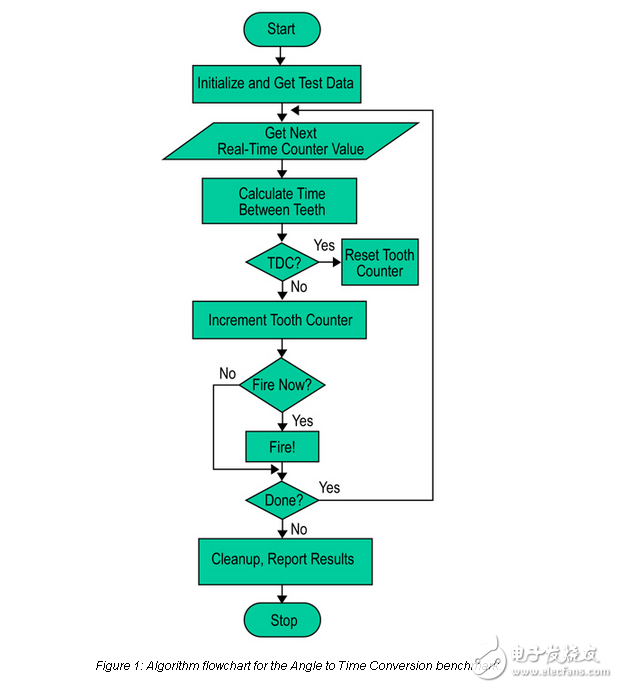
These tests include controller area network (CAN), tooth-to-spark (locating the engine’s cog when the spark is ignited), angle-to-time conversion, road speed calculation, and table lookup and interpolation.
Signal Processing Algorithms
These tests include algorithms which are becoming increasingly important for sensors used in engine knock detection, vehicle stability control, and occupant safety systems. They include fast Fourier transforms (FFT and iFFT), a finite impulse response filter (FIR), an inverse discrete cosine transform (iDCT), and an infinite impulse response (IIR) filter.
In this article we will detail how the various parts of the AutoBench benchmarks work and what they can tell you about how the processor you are considering for your next design will perform in automotive applications.
声明:本文内容及配图由入驻作者撰写或者入驻合作网站授权转载。文章观点仅代表作者本人,不代表电子发烧友网立场。文章及其配图仅供工程师学习之用,如有内容侵权或者其他违规问题,请联系本站处理。 举报投诉
- 相关下载
- 相关文章