资料下载


What‘s Next for High-Power LEDs?

分享资料个
What‘s Next for High-Power LEDs?
高效发光二极管是令人印象深刻的设备。许多领先的半导体公司销售经过验证的商业设备,功效超过100流明/瓦特,寿命超过50000小时。
然而,在当代的产品表现良好,氮化铟镓(InGaN)基白光LED(最常见的类型,产生今天)有一个约250流明/ W的理论有效性限制,因此还有很大的改进余地。诸如载流子注入、内部量子和光提取效率等因素受到学术界和研究人员的密切关注,它们为领先的LED公司工作。
本文回顾了这些科学家和工程师迄今所取得的进展,并对我们可能看到的改进做了展望。
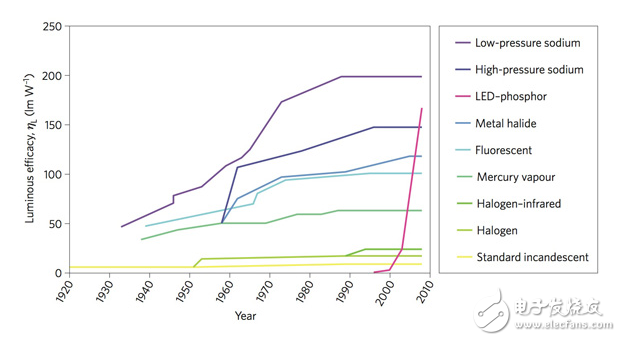
Green credentials
LEDs are touted as the future for environmentally-friendly lighting. Some of their green credentials come from sustainable manufacturing techniques and the use of recyclable materials, but the major benefits for the planet are in the power savings LEDs exhibit compared with traditional lighting sources.
Although there are several techniques for producing white light from LEDs, most contemporary commercial devices combine an InGaN LED, producing light in the blue part of the spectrum, with an yttrium aluminum garnet (YAG)-based phosphor. The phosphor absorbs some of the blue light from the LED and then re-emits it across a broad range of wavelengths comprising some green and red, and a lot of yellow. The combination of blue light from the LED and the range of colors from the phosphor appears as white to the eye (see the TechZone article “Whiter, Brighter LEDs”)。 The rest of this article will be restricted to consideration of this type of white LED.
声明:本文内容及配图由入驻作者撰写或者入驻合作网站授权转载。文章观点仅代表作者本人,不代表电子发烧友网立场。文章及其配图仅供工程师学习之用,如有内容侵权或者其他违规问题,请联系本站处理。 举报投诉
- 相关下载
- 相关文章